A warming, chocolatey drink to sip in the week before your period and through the first days of it. Serve it hot and comforting, or iced and refreshing.
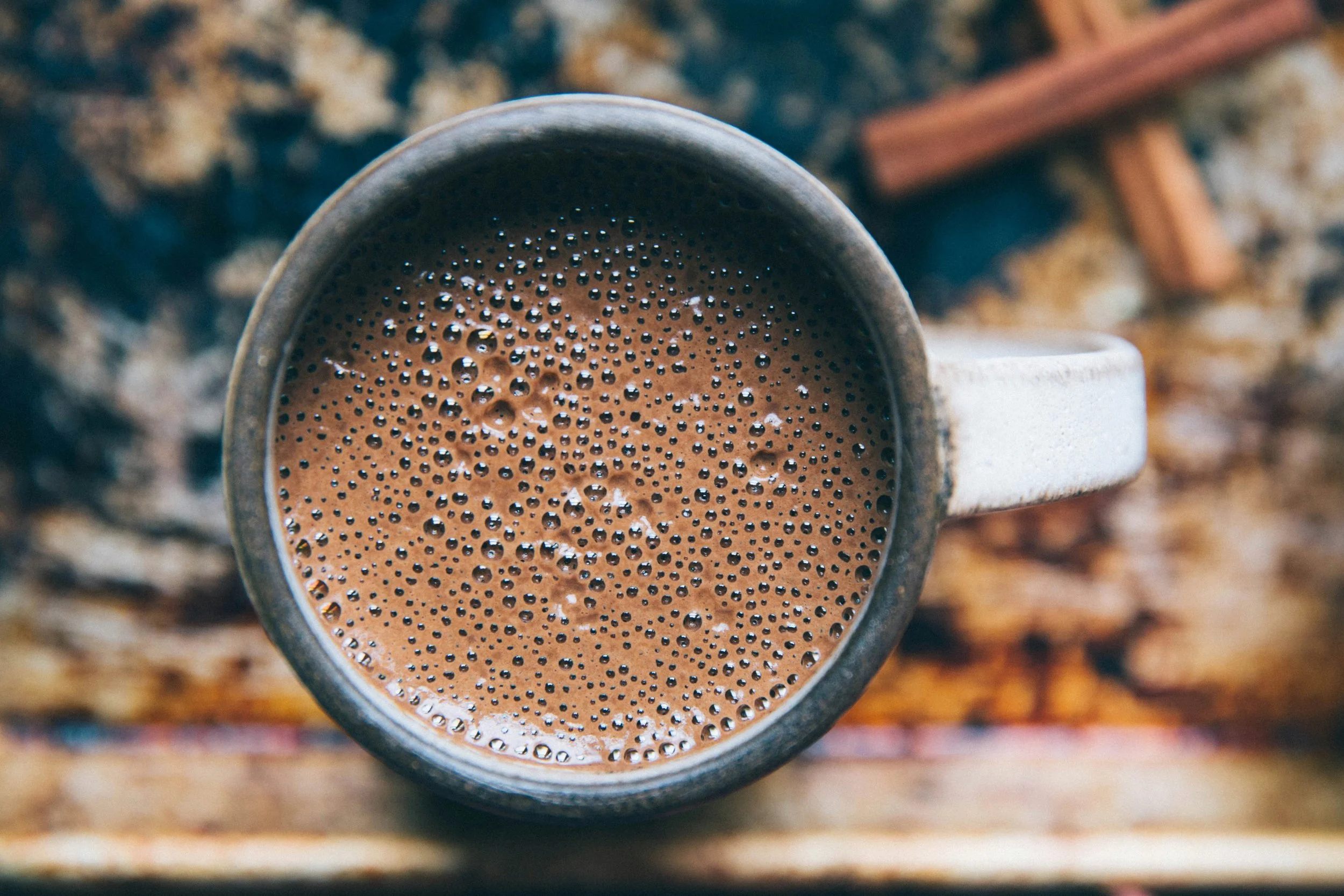
Serves 1 | Prep: 5 minutes
Why this drink?
Cacao powder is one of the richer plant sources of magnesium. A 2 tbsp serving provides about 75mg of magnesium and helps contribute to good magnesium levels in the body. Magnesium helps to relax the smooth muscle in the uterus and modulate prostaglandin synthesis, involved in period pain.
Ginger has been found to be more effective than placebo for reducing pain severity - how cool is that?!
A 2024 meta-analysis concluded ginger can effectively reduce period pain. It is believed this works through ginger suppressing prostaglandin synthesis, which is involved in period pain.
Ingredients
2 tbsp (about 15 g) unsweetened raw cacao powder
2 tbsp hot water
1 cup (250 ml) unsweetened almond, cashew or hazelnut milk
1 tsp freshly grated ginger (or ½ tsp ground ginger)
1–2 tsp maple syrup or honey, to taste (raw cacao is more bitter than cocoa, so you may want a little extra)
½ tsp vanilla extract
Small pinch of sea salt
Pinch of cinnamon (optional)
1 tbsp almond butter (optional, for creaminess and extra magnesium)
Ice (iced version only)
Method
Step 1 (both versions): Whisk the cacao powder with the hot water in a mug or glass until it forms a smooth paste. Stir in the maple syrup, vanilla, salt, cinnamon and almond butter, if using.
Step 2 (choose one):
Hot: Gently warm the nut milk in a small saucepan with the ginger over low heat for about 5 minutes, until steaming but not boiling, as nut milks can separate if overheated. Strain if you prefer a smooth drink, then slowly pour into the cacao paste, whisking as you go.
Iced: Blend the chilled nut milk and ginger for 20 seconds, then strain if you like. Pour slowly into the cacao paste, stirring as you go, then fill the glass with ice and stir again.
How to enjoy it
Have one glass or mug a day in the week leading up to your period. In the Cochrane trials, one magnesium regimen began on the day before menstruation and continued on days 1 and 2 of the cycle. You may like to keep going for the first couple of days of your period.
Many people find a warm drink soothing when cramps start, so you could have the iced version earlier in the week and the hot one once your period arrives.
A note on dairy…
Dairy affects people differently, and some people find lactose or dairy leaves them bloated or uncomfortable. If that’s you, a nut milk is an easy swap. Nuts add a little magnesium too. If you need nut-free, soy milk works just as well. Research on dairy and period pain is mixed, so notice how your own body responds.
Extra notes:
One drink is a supportive food, not a treatment.
Choose unsweetened cacao, because sweetened hot chocolate mixes contain far less cacao per spoonful.
Severe pain, or pain that is getting worse, deserves a visit to your healthcare practitioner, as it can be a sign of conditions like endometriosis.
This recipe is for general information and isn’t medical advice.
References
Bajalan, Z., Alimoradi, Z., & Moafi, F. (2019). Nutrition as a potential factor of primary dysmenorrhea: A systematic review of observational studies. Gynecologic and Obstetric Investigation, 84(3), 209–224. https://doi.org/10.1159/000495408
Chen, C. X., Barrett, B., & Kwekkeboom, K. L. (2016). Efficacy of oral ginger (Zingiber officinale) for dysmenorrhea: A systematic review and meta-analysis. Evidence-Based Complementary and Alternative Medicine, 2016, Article 6295737. https://doi.org/10.1155/2016/6295737
Moshfeghinia, R., Salmanpour, N., Ghoshouni, H., Gharedaghi, H., Zare, R., Cramer, H., Heydarirad, G., & Pasalar, M. (2024). Ginger for pain management in primary dysmenorrhea: A systematic review and meta-analysis. Journal of Integrative and Complementary Medicine, 30(11), 1016–1030. https://doi.org/10.1089/jicm.2023.0799
Parazzini, F., Di Martino, M., & Pellegrino, P. (2017). Magnesium in the gynecological practice: A literature review. Magnesium Research, 30(1), 1–7. https://doi.org/10.1684/mrh.2017.0419
Pattanittum, P., Kunyanone, N., Brown, J., Sangkomkamhang, U. S., Barnes, J., Seyfoddin, V., & Marjoribanks, J. (2016). Dietary supplements for dysmenorrhoea. Cochrane Database of Systematic Reviews, (3), Article CD002124. https://doi.org/10.1002/14651858.CD002124.pub2
Proctor, M., & Murphy, P. A. (2001). Herbal and dietary therapies for primary and secondary dysmenorrhoea. Cochrane Database of Systematic Reviews, (3), Article CD002124. https://doi.org/10.1002/14651858.CD002124
Saei Ghare Naz, M., Kiani, Z., Rashidi Fakari, F., Ghasemi, V., Abed, M., & Ozgoli, G. (2020). The effect of micronutrients on pain management of primary dysmenorrhea: A systematic review and meta-analysis. Journal of Caring Sciences, 9(1), 47–56. https://doi.org/10.34172/jcs.2020.008